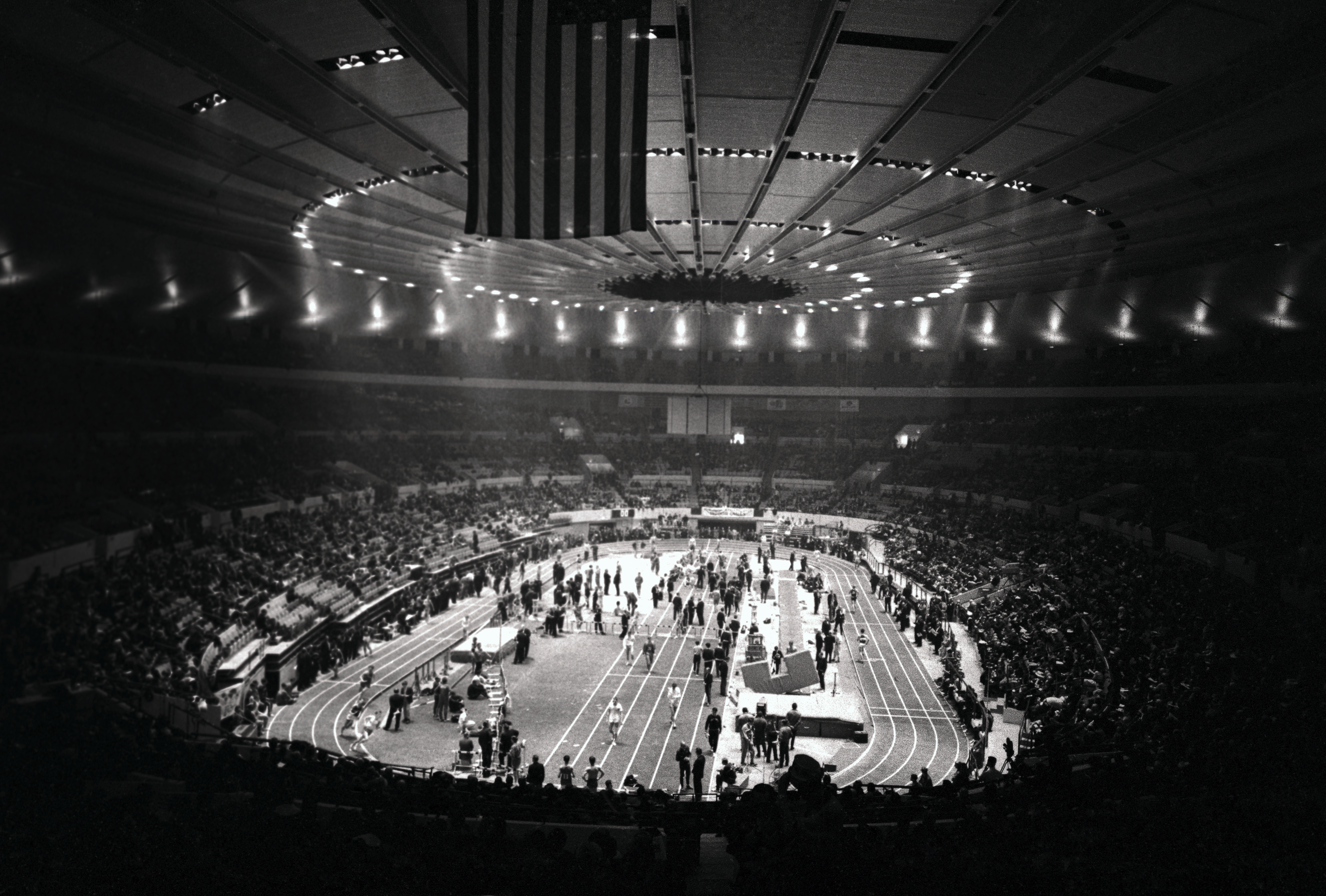
The Boards
Words by Ray Brown
Photography by Getty
Track fans have always been obsessed with records. Even casual fans of the sport know Roger Bannister was the first person to break the 4:00 barrier for the mile. Record attempts are wonderful but they frequently become glorified time trials. More often than not, the fans go home disappointed; it makes one nostalgic for the olden days of indoor track and field.
This is easy for me to say since I had a pretty good run on the U.S. indoor circuit from the early 1980’s to the early 90’s. One could describe this era and the years back to the sports inception in the late 1890’s as Vaudevillian. Indoors was an ad-hoc, makeshift affair designed to satisfy an athlete's desire to compete because the wait between the end of outdoor track in September and the start of a new season in March was too long to endure. Indoor runners certainly believed that “the show must go on.”
Ray Flynn, the Irish Mile and 1500m record holder (and today, best known as a sport agent and meet director), recently shared with me that during his day in the 1980’s racing was a matter of “lifestyle.” He recalled how in the winter of 1981 he, former Mile World Record holder from New Zealand, Sir John Walker, and former American Mile record holder Steve Scott ran a mile race in Sydney, Australia on a Wednesday and then ran an indoor mile in San Diego on the Friday. The next day, they all ran another mile race in Dallas. The arduous travel may have compromised their race times but not their efforts. Ray enthusiastically told me, “We liked to compete.”
Indoor running has always been about competition, not performance. Athletes and fans embraced the fact that times and marks would suffer when the 440 yard outdoor track was condensed to a 160 yard track, as was the case at Madison Square Gardens when they squeezed a meet into a space never designed for its existence.
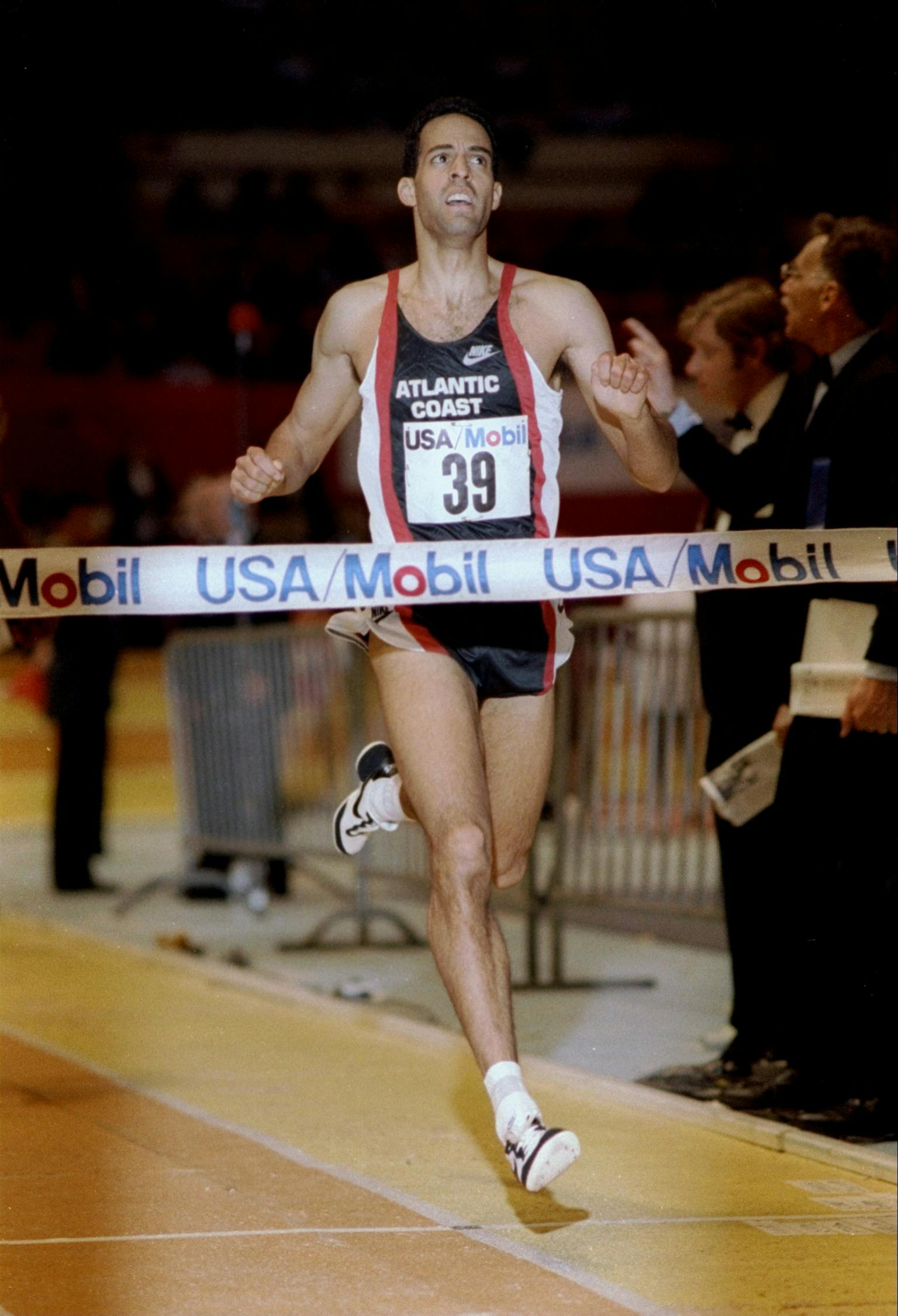
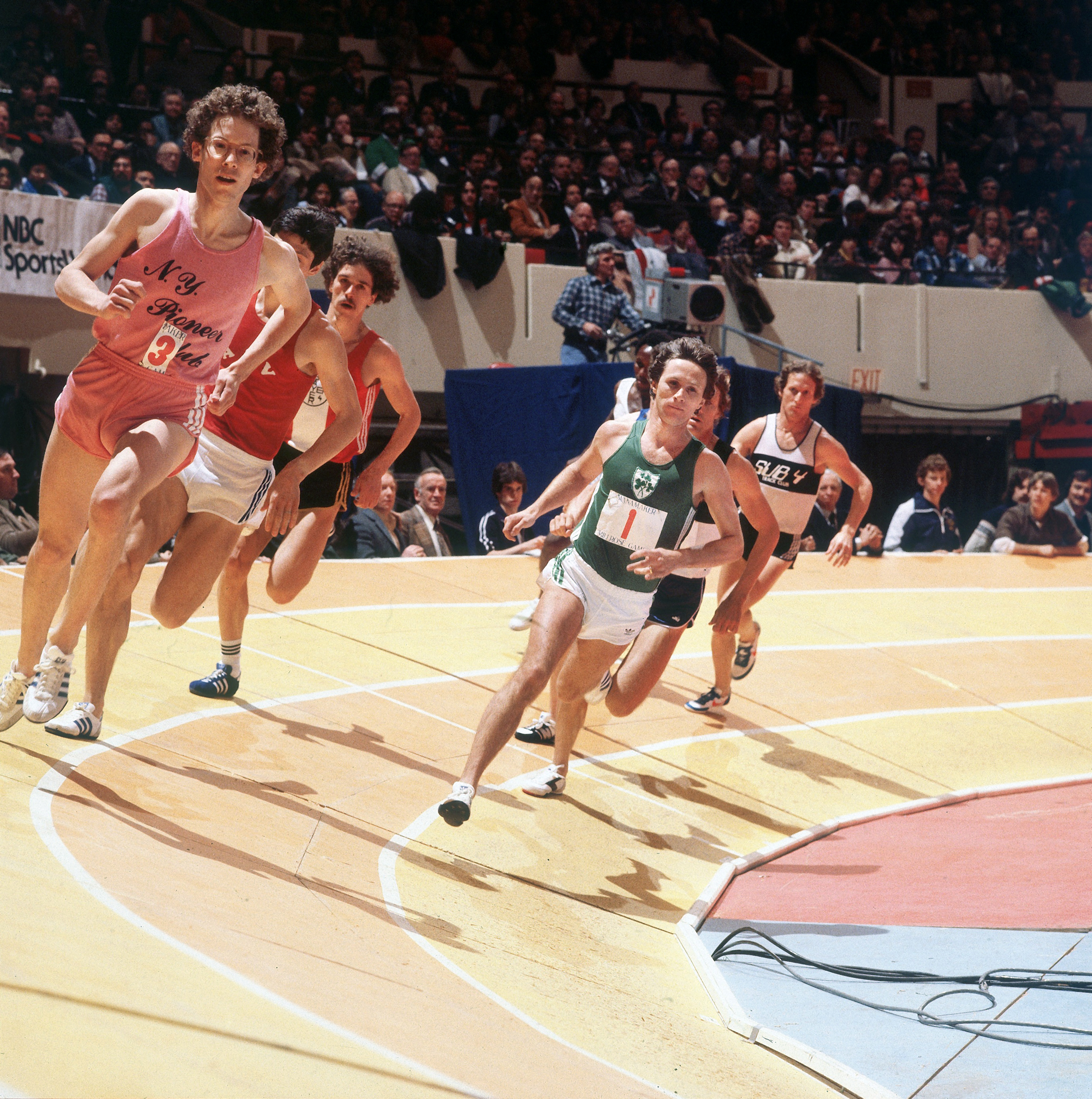
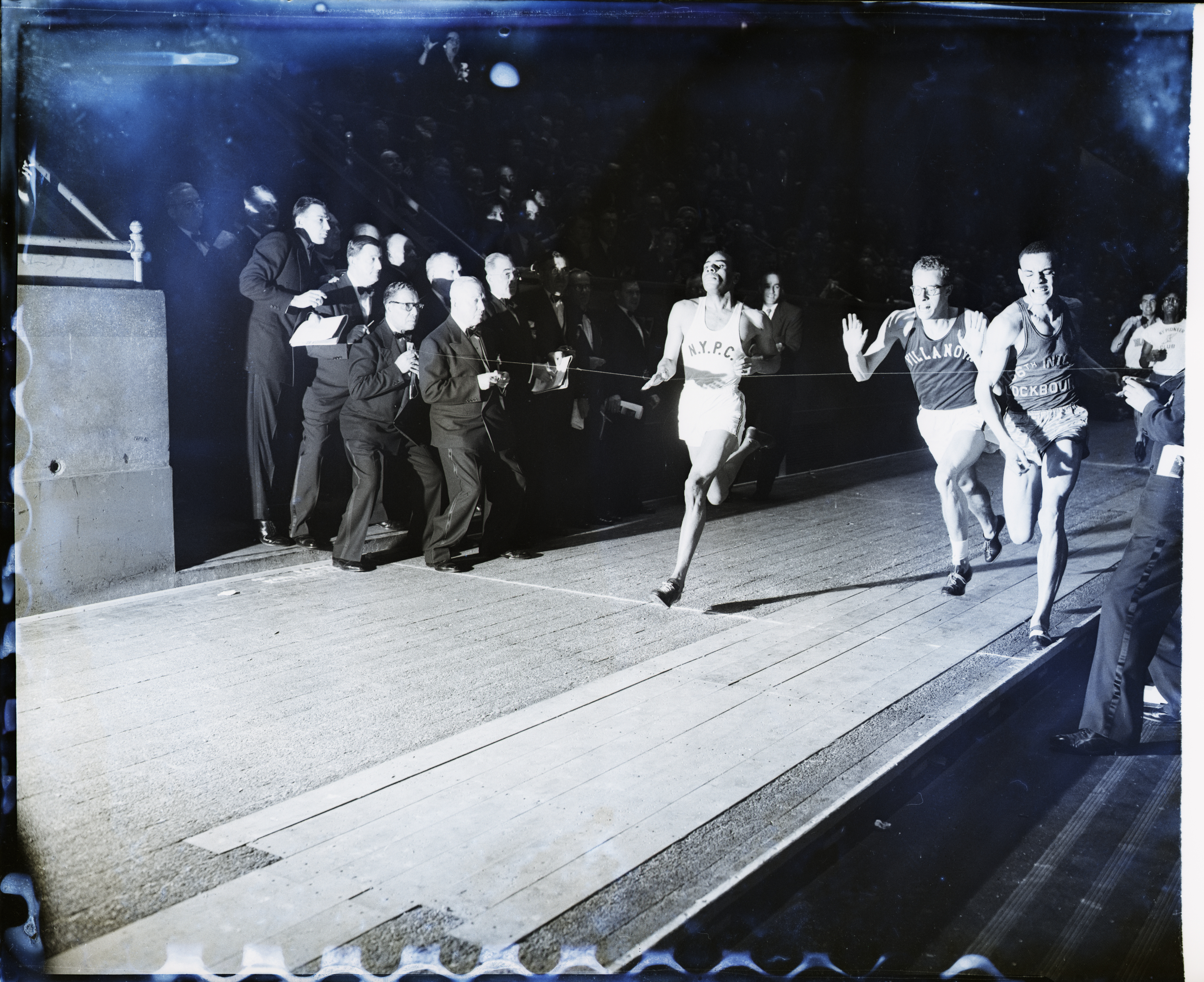
The constrained space of indoor meets created many obstacles for athletes. For example, the tight turns and short straightaways added a dimension of danger and drama to the races. Fans would hold their breath at the start of every race as the runners jostled for the pole position. Survival became an added theatrical feature of the races. Anyone who raced on the renowned flat wooden floor of the 168th Armory in Washington Heights which hosted a number of big meetings in the early and mid 20th century, can fondly recount a story of picking splinters out of their derriere after an inevitable fall.
In fact, Dr. Norbert Sanders, who not only won the first New York City Marathon but also raised 25 millions dollars to renovate the 168th St. Armory recalls, “In the very first turn of one of my races at the old Armory, I went stumbling into the furniture and the spectators. I had splinters and floor burns. My skin looked like it had gone through a meat grinder. I was as red as a beet.”
In 1914, the Millrose Games, which remain the world’s most prestigious indoor meet, moved downtown from the 168th St Armory to Madison Square Garden because the Armory couldn’t accommodate their overflowing crowds. The Boards, a 160 yard wooden, banked, four lane track engineered with the precision of a high school science project, became the standard for other facilities.
At its height, there were four indoor meets at Madison Square Garden, “The World’s Most Famous Arena,” until the 1970s. More than a dozen other arenas like the Los Angeles Forum, San Francisco Cow Palace, Rosemont Horizon in Chicago and Maryland’s Cole Field House hosted international competitions to capacity crowds of over 14,000 spectators.
The fans and athletes shared a symbiotic relationship. As former mile and 800m world record holder and current World Athletics President Sebastian Coe noted, the tight, close quarters of indoors creates an intimacy not found outdoors, even at the Olympics. In turn, the athletes reciprocated by competing with their hearts.
Chip Jenkins, the 1992 Olympic 4x400 relay Gold Medalist, succinctly describes the indoor sprinter’s mentality when he states, “If you beat me, you earned it.” Positioning is paramount in indoor racing. Many sprinters like Jenkins had one strategy for their indoor races: grab the lead and don’t let it go. The lead was protected like an unsynced Garmin – don't let it go. So be it if you faded because you weren’t as fit as you thought or couldn’t withstand the gallant challenge of an opponent. You earned it.
The constricted space of indoors also hampered the field events. For example, four time Olympic Long Jump Champion Carl Lewis had a long approach to the takeoff board. At the 1984 Millrose Games, he was forced to start his approach high up on the running track and ran down the track over a connecting board and onto the long jump runway. When Carol Lewis, his sister, saw that the connecting board was loose and was throwing him off stride, she held it steady for him.On this night, seemingly out of defiance, Lewis' sailed down his makeshift runway and set an indoor world record of 28 '10 on his last jump. He called the jump his “best ever indoors or outdoors.” The mark is still the world record 39 years later. Imagination, creativity and adaptation are hallmarks to greatness and indoor track athletes in particular.
Indoor wasn’t revered by all track athletes. Nick Symmonds, one of the all-time great American 800m runners, recently posted to his 1M YouTube subscribers a missive on why he hated indoors. His complaints were somewhat tongue-in-cheek quips on the unnecessary challenges indoors proposed. He even lamented the “indoor hack” everyone gets from extreme physical exertion in a poorly ventilated arena. I may vehemently disagree with him but many of his points were valid.
Nevertheless, I always felt it was an honor to race indoors. Many of my races were in stadiums where NBA teams played, historic concerts were held or other significant events took place. The prized venues validated the experience.
Subsequently, I marched into Madison Square Garden at 9:30 in the morning ten years in a row to run qualifying rounds for the 800m at the USA Track and Field National Championships. The only people in attendance were other athletes, coaches, officials and maintenance people. Tourists pay good money for personal tours of MSG. I literally had a run of the entire stadium on these mornings and later that evening, crowds of 16,000 people lifted me to some of my all-time best performances.
Many of the successful indoor athletes held an east coast sensibility. We endured the elements to do our training. We didn’t retreat to winter training camps in warm weather climates. We took whatever was thrown at us and endured. We were calloused and that’s what it took to run the boards.
In 1987, indoor track was validated when the IAAF held the first World Indoor Championships at the Hoosier Dome in Indianapolis, Indiana. The state of the art six lane 200m track built for the meet set a new standard for the sport. It also fully exposed the backwardness of the U.S circuit.
The Boards gave way to the new 200m wonders. Harvard’s Division of Applied Sciences published a research paper on the studies they compiled to construct their new track in the mid 1980s. The scientist noted, “Running is essentially a series of bounds… in order to build a fast track it is necessary to understand how the physiological properties of [athletes] muscles and the reflexes that control them determine the functioning of their mechanical system.” In a matter of time, it was no longer tolerable for world class athletes to compete on the shabby tracks of the old era.
The U.S.A Indoor Championships moved out of Madison Square Garden in 1994. Such is the luster of Millrose, that it held on at the Garden until 2012 when it returned to the 168th St. Armory. Today, dozens of scientifically designed tracks dot the country. These wonderful facilities have contributed to more depth and better performances. Most importantly, the difference between indoor and outdoor performances is now minimal. No one can complain about running fast.

The thrill of racing on the indoor track is unmatched. Banked turns, an electric crowd and springy floorboards provide the perfect environment for running for a winter PB. On February 25, we’ll host a mini-series of indoor mile races at the Armory in New York City. Each heat will include pace groups to help you chase your goals.
If you’ve been eyeing a PR, looking to work on your speed, or are just interested in trying out the indoor track, this series is for you